
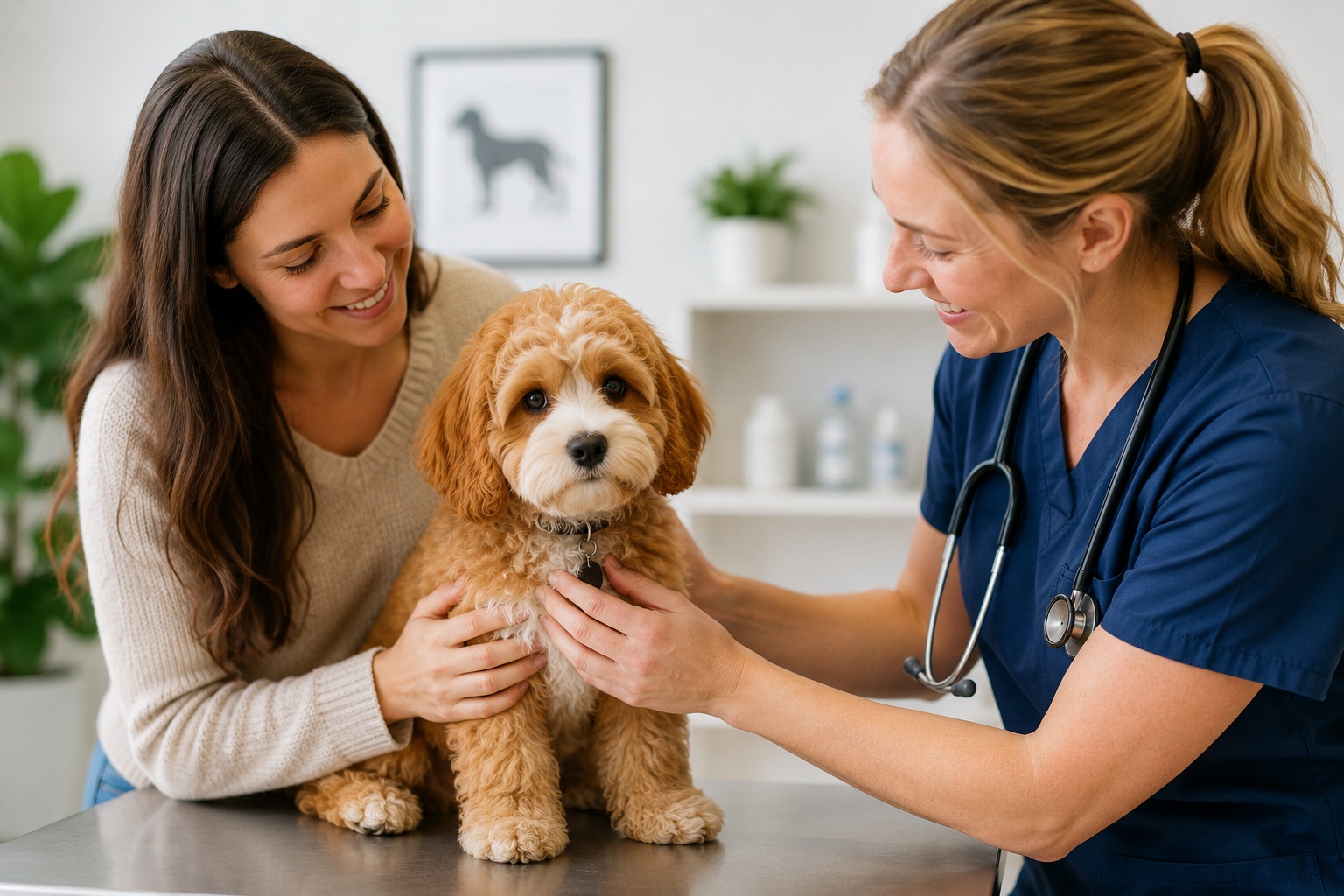
Bringing home a Cavoodle means finding more than a groomer, trainer and favourite walking spot. One of the most important relationships you will establish is with your veterinarian.
A good vet gets to know your dog over time, understands what is normal for them and helps you make informed decisions about preventative care, illness, injuries and long-term health.
For families in South Australia, there are plenty of veterinary clinics to choose from. But the closest clinic is not necessarily the right clinic for your Cavoodle.
This guide explains what we recommend looking for when choosing a vet, the questions worth asking and why the ownership and structure of a veterinary practice may also be something you want to consider.
Quick Answer: How Do I Choose a Good Vet for My Cavoodle?
Look for a veterinary clinic that:
- Communicates clearly and takes time to answer questions
- Has experience caring for puppies and small companion breeds
- Provides practical, evidence-based preventative healthcare
- Is transparent about treatment options and costs
- Allows you to build an ongoing relationship with the same vet or veterinary team
- Has clear arrangements for emergencies and after-hours care
- Makes your Cavoodle feel as comfortable as possible during visits
- Is willing to discuss different treatment options rather than taking a one-size-fits-all approach
At Glenroy Cavoodles, we also have a strong preference for independently owned veterinary practices where possible. For us, continuity, personal relationships and individualised care are particularly important.
That does not mean ownership alone determines whether a veterinarian is good or bad. Excellent veterinary professionals work in many different practice settings. It simply means clinic ownership is another factor families may wish to consider when deciding where they feel most comfortable taking their dog.
Why Your Choice of Vet Matters
Your veterinarian may care for your Cavoodle from puppyhood through to their senior years.
During that time, they may be involved in:
- Puppy health checks
- Vaccinations
- Parasite prevention
- Desexing discussions
- Dental health
- Nutrition and weight management
- Ear and skin problems
- Injuries and unexpected illnesses
- Blood tests and diagnostic imaging
- Age-related health concerns
- Referrals to veterinary specialists
When the same veterinary team sees your dog regularly, they can also become familiar with your Cavoodle’s medical history, temperament and normal behaviour.
This continuity can be valuable when something changes.
It is therefore worth choosing a veterinary clinic carefully rather than waiting until your puppy becomes sick.
Independent vs Corporate Veterinary Clinics
One consideration that is sometimes overlooked is who actually owns the veterinary clinic.
Australian veterinary practices include independently owned clinics as well as practices operated by larger veterinary groups and corporate networks.
Corporate ownership does not automatically mean poor veterinary care. Individual veterinarians and nurses should be judged on their own professionalism, knowledge and approach to animal welfare.
However, at Glenroy Cavoodles, our preference is for independent veterinary practices.
Why?
We value the possibility of developing a long-term relationship with a veterinarian and clinic team who know our dogs. We also appreciate practices where communication feels personal and where owners can have open discussions about preventative care, diagnostic options, treatment choices and costs.
For this reason, we encourage our puppy families to investigate the practice itself rather than choosing a clinic solely because its brand is familiar.
Ask:
Who owns the clinic?
Can I request the same veterinarian for routine appointments?
How long have the vets been working at the practice?
How are treatment options presented?
Will the vet explain why a test, medication or procedure is being recommended?
Can I ask about alternatives and likely costs before proceeding?
The answers can tell you much more about a clinic than its signage.
What Should You Look for in a Cavoodle Vet?
There is no veterinary speciality specifically for Cavoodles, and your vet does not need to exclusively treat Cavoodles.
What matters is finding a veterinarian who is comfortable managing the health needs commonly encountered in small companion dogs and Poodle-cross breeds (Oodles).
1. Good Communication
You should feel comfortable asking your veterinarian questions.
A good consultation should help you understand:
- What the vet has found
- What they recommend
- Why they recommend it
- What alternatives may exist
- What the treatment is expected to achieve
- What it is likely to cost
- What you should watch for at home
Veterinary medicine can sometimes involve uncertainty. A trustworthy vet should be able to explain that uncertainty rather than making every decision sound absolute.
2. A Sensible Approach to Preventative Care
Preventative veterinary care is important, but it should still be individualised.
Your veterinarian can help you establish an appropriate schedule for vaccinations, parasite prevention, dental checks, weight monitoring and other routine care based on your dog’s age, health, lifestyle and local risks.
3. Experience With Common Cavoodle Health Concerns
Cavoodles can experience many of the same health problems as other dogs, while some conditions may warrant particular attention because of their Cavalier King Charles Spaniel and Poodle ancestry.
A good vet should be comfortable assessing concerns involving areas such as:
- Ears
- Skin and coat
- Teeth and gums
- Eyes
- Knees and joints
- Heart health
- Weight and nutrition
Having a Cavoodle does not mean your dog will develop these problems. Responsible breeding, health screening, appropriate care and genetics all contribute to an individual dog’s health.
Your vet’s role is to help identify concerns early when they do occur.
Continuity of Care Matters
One of the biggest things we recommend looking for is continuity.
If possible, find a clinic where you can regularly book appointments with the same veterinarian or a small team of vets.
Imagine your Cavoodle develops an ongoing skin problem.
Seeing a different veterinarian at every appointment can mean repeatedly explaining when the problem started, which foods have been tried, which treatments helped and what made the symptoms worse.
A vet who has followed the case from the beginning already understands much of that history.
The same applies to behaviour, dental disease, recurring ear problems, weight changes and chronic conditions.
Of course, seeing the same veterinarian every time will not always be possible. Holidays, emergencies and staff schedules make that unrealistic.
What matters is whether the practice values continuity and maintains good clinical records so another veterinarian can easily understand your dog’s history.
Pay Attention to How Your Cavoodle Is Handled
Veterinary visits can be intimidating for dogs.
There are unfamiliar smells, slippery surfaces, strange people and sometimes uncomfortable procedures.
A positive veterinary team should make reasonable efforts to minimise unnecessary stress.
Look for vets and nurses who:
- Approach nervous dogs calmly
- Give puppies time to settle when practical
- Use appropriate handling and restraint
- Pay attention to body language
- Encourage positive experiences during routine visits
Early veterinary experiences can influence how comfortable your Cavoodle feels about visiting the clinic later in life.
You can help too.
Bring suitable treats if your vet allows them, practise gentle handling of your puppy’s paws and ears at home, and occasionally visit the clinic for a positive experience if the practice offers puppy-friendly social visits.
Ask About Costs Before Treatment
Veterinary medicine can become expensive, particularly when diagnostic testing, surgery, hospitalisation or specialist treatment is required.
A good clinic should be comfortable discussing costs.
For non-emergency procedures, ask for an estimate before treatment begins.
If several diagnostic or treatment options are available, ask your veterinarian to explain:
- What each option involves
- Why it is being recommended
- What information a test may provide
- Whether treatment is urgent
- What alternatives are available
- What the approximate costs are
Asking about money does not mean you care less about your dog.
It allows you to make informed decisions.
Ask About Pet Insurance and Payment Options
Veterinary treatment can become expensive unexpectedly, particularly if your Cavoodle needs emergency care, diagnostic imaging, surgery or specialist treatment.
Many families choose to arrange pet insurance while their puppy is young. This can be worth considering early because insurers generally exclude pre-existing conditions, although policies, waiting periods, exclusions, limits and excesses vary considerably.
When choosing a veterinary clinic, you can ask:
Whether the clinic regularly processes pet insurance claims
Whether claims can be submitted electronically or directly
Whether payment is required upfront before reimbursement
Whether the clinic offers any payment options for larger veterinary bills
At Glenroy Cavoodles, puppies go home with two months of complimentary Knose Pet Insurance, giving new families an opportunity to have cover in place during the early settling-in period. Families should review the policy terms carefully and decide whether continuing insurance is appropriate for their circumstances.
Find an Emergency Vet Before You Have an Emergency
Your regular veterinarian may not provide 24-hour care.
Ask your chosen clinic what happens if your Cavoodle becomes seriously ill or injured outside normal opening hours.
Save the details of the appropriate emergency veterinary service in your phone before you need it.
You should also know approximately how long it takes to reach the emergency facility from your home.
In an emergency, having a plan is much easier than searching for an available vet while you are worried about your dog.
Red Flags When Choosing a Veterinary Clinic
No single experience necessarily means a clinic is unsuitable. However, repeated patterns may indicate that another practice would be a better fit.
Be cautious if you regularly experience:
- Poor explanations of proposed treatment
- Difficulty getting answers to reasonable questions
- Pressure to make non-urgent decisions immediately
- Unclear estimates or unexpected costs that were not discussed
- Recommendations without an explanation of their purpose
- Constantly changing vets with little continuity
- Dismissal of your observations about your own dog
- Handling that causes unnecessary distress when gentler options are available
A strong vet-owner relationship should feel collaborative.
Your veterinarian brings medical expertise. You bring knowledge of your dog’s everyday behaviour, routine and personality.
Both are important.
Questions to Ask a New Veterinary Clinic
You do not need to interview a clinic for an hour before registering your puppy.
A few practical questions can tell you a great deal:
- Is the practice independently owned or part of a larger veterinary group?
- Can I request the same vet for routine appointments?
- Do you regularly treat Cavoodles and other small companion breeds?
- What happens if my dog needs care after hours?
- Where do you refer patients requiring specialist treatment?
- Can you provide treatment estimates before non-emergency procedures?
- How do you approach nervous or anxious dogs?
- How far ahead are routine appointments usually booked?
You can also read recent reviews, but do not choose a veterinarian based entirely on star ratings.
Personal recommendations from responsible breeders, experienced dog owners and other local pet professionals can also be useful.
Your Cavoodle Puppy’s First Vet Visit
Once your Glenroy Cavoodle comes home, establish a relationship with your chosen veterinary clinic early.
Bring any health information and records supplied with your puppy so the veterinarian can understand what care has already been provided.
The first appointment is also a useful opportunity to discuss:
- Future vaccinations
- Parasite prevention
- Nutrition
- Growth and healthy body condition
- Dental care
- Grooming-related ear and skin care
- Desexing
- Exercise
- Any concerns you have noticed since bringing your puppy home
Do not be afraid to write your questions down beforehand.
Puppy appointments can contain a lot of information, and it is easy to forget something you wanted to ask.
Should You Change Vets If You Are Not Happy?
Yes.
Choosing a veterinary clinic is not a permanent commitment.
If you consistently feel uncomfortable with the communication, approach or care being provided, you are entitled to seek another veterinarian.
You can request that your dog’s veterinary records be transferred to the new clinic so their medical history remains available.
You may also seek a second veterinary opinion when faced with a significant diagnosis or treatment decision.
Changing clinics does not necessarily mean the previous veterinarian did something wrong. Sometimes another veterinarian’s communication style, philosophy or practice structure is simply a better fit for you and your dog.
Our Approach at Glenroy Cavoodles
We believe responsible breeding and good veterinary care should work together.
Health begins well before a puppy visits its new family’s veterinarian. Genetics, thoughtful breeding decisions, appropriate health screening, early nutrition, socialisation and puppy care all contribute to giving a dog a strong start.
Once a puppy leaves us, a trusted veterinarian becomes an important part of that dog’s ongoing care.
Our preference is for independent veterinary practices that value continuity, transparency and individualised care. We encourage our families to ask questions, understand recommendations and build a genuine relationship with a veterinarian they trust.
Ultimately, the best vet for your Cavoodle is not determined by the biggest clinic, the most recognisable brand or even the practice closest to home.
It is the veterinary team that combines professional care with good communication and makes you feel confident that decisions are being made with your individual dog in mind.
Frequently Asked Questions
Does my Cavoodle need a vet who specialises in Cavoodles?
No. Cavoodles do not require a breed-specific veterinarian. Look for a good general-practice vet who is experienced with puppies, small companion breeds and the types of health concerns that can affect Cavalier and Poodle lines.
Should I choose an independent vet?
That is a personal decision. Glenroy Cavoodles has a strong preference for independently owned veterinary practices because we value continuity and personal relationships. However, clinic ownership alone does not determine the quality of an individual veterinarian.
How often should a healthy Cavoodle see a vet?
Healthy adult dogs generally benefit from regular veterinary health checks, with the frequency determined by their age, health and individual circumstances. Puppies and senior dogs may require more frequent visits.
Can I request the same veterinarian each time?
Many clinics allow you to request a particular vet, although availability cannot always be guaranteed. It is worth asking when you register.
Should I find an emergency vet as well as my regular vet?
Yes. Know where your nearest appropriate after-hours veterinary service is and save its contact details before an emergency occurs.
What should I bring to my puppy’s first appointment?
Bring the health and vaccination records supplied with your puppy, details of any medications or preventatives being used and a list of questions you would like to discuss.
Is it okay to get a second veterinary opinion?
Yes. Seeking another professional opinion can be reasonable, particularly when dealing with a significant diagnosis, complex treatment decision or ongoing problem.