
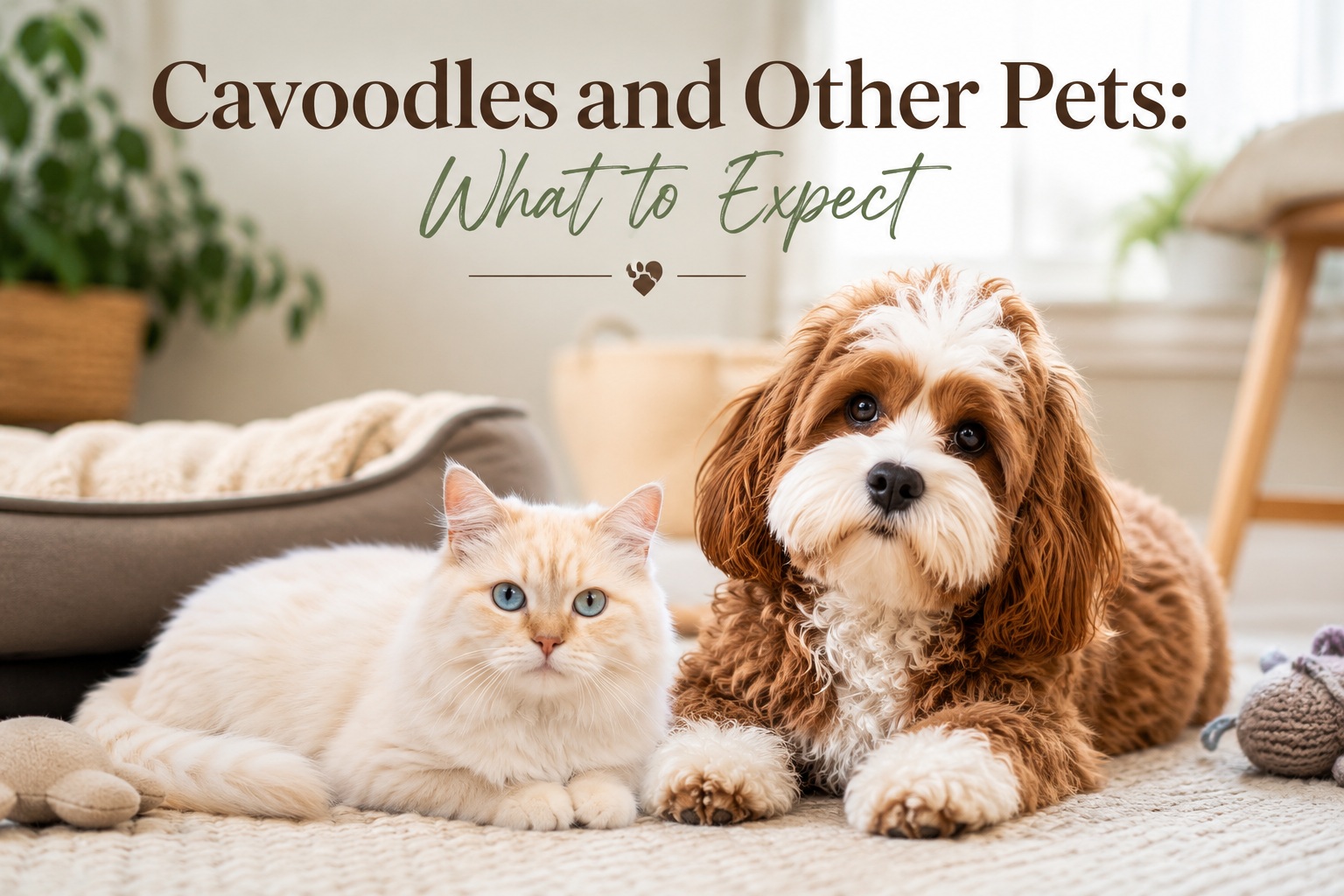
Bringing a new dog into a home that already has pets can feel exciting and nerve-racking at the same time. If you’re considering a Cavoodle, there’s good news: these affectionate little dogs are generally known for getting along well with other animals. But like any breed, success depends on personality, training, introductions, and the environment they grow up in.
For many Australian families, Cavoodles fit naturally into multi-pet households because they’re social, gentle, and eager to be part of the action. Whether you already have a senior dog, a curious cat, backyard chickens, or even smaller pets, understanding how Cavoodles behave around animals can help create a calmer and happier home for everyone.
Why Cavoodles Tend to Mix Well with Other Pets
The Cavoodle is a cross between the Cavalier King Charles Spaniel and the Poodle. Both parent breeds are known for being intelligent, companion-focused, and people-oriented. That combination often creates a dog that enjoys company — not just from humans, but from other animals too.
Many Cavoodle owners notice that their dog prefers being around others rather than spending long periods alone. They often seek interaction, play, and closeness, which can make them excellent companions for homes with multiple pets.
That said, every dog is still an individual. Some Cavoodles are naturally confident and playful, while others may be shy or cautious at first. Early socialisation plays a huge role in shaping how comfortable they feel around different animals later in life.
Introducing a Cavoodle to Another Dog
The first meeting matters more than most people realise. Even friendly dogs can become overwhelmed if introductions happen too quickly.
Start on Neutral Ground
If possible, introduce both dogs somewhere neutral, like a quiet park or open walking area. Dogs can become territorial inside their own home, especially older pets that are used to having the space to themselves.
Walk the dogs side by side before allowing direct interaction. This gives them a chance to observe each other without pressure.
Watch Body Language Carefully
Good signs include:
- Relaxed posture
- Loose wagging tails
- Curiosity without fixation
- Play bows
- Sniffing and moving away naturally
Signs of stress may include:
- Stiff body posture
- Hard staring
- Raised hackles
- Growling
- Lip licking or yawning repeatedly
- Hiding or avoidance
A calm introduction is far better than a rushed one. Many dogs warm up gradually over several days.
Give Both Dogs Their Own Space
One common mistake is expecting instant friendship. Even social Cavoodles need downtime and boundaries.
Provide separate:
- Beds
- Food bowls
- Toys
- Quiet resting areas
This helps prevent tension while they adjust to sharing the household.
Are Cavoodles Good with Cats?
In many cases, yes. Cavoodles often do surprisingly well with cats, especially if introduced at a young age. Their friendly temperament and moderate prey drive usually make them less intense than some working or hunting breeds.
Still, there are important things to consider.
Puppies Often Adapt Faster
A Cavoodle puppy raised around cats usually learns feline boundaries quickly. They grow up seeing cats as part of the family rather than something exciting to chase.
Adult Cavoodles can also adapt successfully, but introductions may take longer.
Let the Cat Control the Pace
Cats generally cope better when they have escape routes and elevated spaces. Never force interactions.
Set up:
- Cat trees
- Baby gates
- Shelves or high furniture access
- Separate feeding zones
The goal is to help the cat feel safe enough to observe the new dog without panic.
Expect Curiosity at First
Many Cavoodles are playful and may initially annoy a cat simply because they want interaction. Barking, bouncing, or following the cat around is fairly common early on.
Consistent redirection helps:
- Reward calm behaviour
- Interrupt chasing immediately
- Teach “leave it”
- Encourage settling on a mat or bed
With time, many Cavoodles and cats develop a peaceful rhythm — even if they never become best friends.
Cavoodles and Small Animals
Australian homes sometimes include rabbits, guinea pigs, birds, or chickens. While Cavoodles are typically gentler than many breeds, supervision is still essential.
Rabbits and Guinea Pigs
Some Cavoodles coexist calmly with small mammals, but instinct can still kick in unexpectedly during excitement or play.
Important precautions include:
- Never leaving them unsupervised together
- Using secure enclosures
- Teaching impulse control early
- Rewarding calm observation
Even playful behaviour from a dog can accidentally injure a smaller animal.
Birds
Birds can trigger curiosity due to movement and noise. Some Cavoodles ignore them completely, while others become highly interested.
Always supervise interactions and keep bird cages secure. Training calm behaviour around the cage from puppyhood helps significantly.
Backyard Chickens
More Australian families are keeping chickens, especially in suburban and semi-rural areas. Cavoodles can adapt well, but introductions should be gradual.
Some dogs simply learn that chickens are part of the environment. Others may chase due to movement.
Use:
- Leads during early introductions
- Controlled exposure
- Positive reinforcement for calm behaviour
- Secure fencing
Consistency matters more than intensity.
What Makes Multi-Pet Homes Successful?
Living peacefully with other pets is rarely about luck alone. Usually, it comes down to management, training, and understanding animal behaviour.
Early Socialisation Is Critical
A well-socialised Cavoodle is usually more adaptable and confident.
Good socialisation includes calm exposure to:
- Different dog breeds and sizes
- Cats
- Household noises
- Visitors
- New environments
- Veterinary handling
The keyword is positive. Overwhelming experiences can have the opposite effect.
Training Builds Confidence
Basic obedience creates structure and reduces chaos in multi-pet households.
Helpful commands include:
- Sit
- Stay
- Leave it
- Come
- Place or mat training
Training is not just about control — it teaches your Cavoodle how to behave calmly around distractions and excitement.
Routine Helps Everyone
Pets generally feel safer when life is predictable.
Try to keep:
- Feeding times consistent
- Walk schedules regular
- Quiet times respected
- Sleeping areas stable
A sudden lack of structure can create anxiety, especially in sensitive dogs like Cavoodles.
Common Challenges Owners Experience
Even friendly dogs can have adjustment periods. That’s normal.
Jealousy or Attention Seeking
Cavoodles often bond closely with their humans. When another pet enters the picture, some may become clingy or demand more attention.
You might notice:
- Barking when another pet gets attention
- Pushing between pets and people
- Following owners constantly
Avoid punishing this behaviour harshly. Instead:
- Reward calm independence
- Give one-on-one attention fairly
- Maintain routines
- Encourage enrichment activities
Overexcitement
Young Cavoodles can become overly enthusiastic during play. Their intentions are usually friendly, but not all pets appreciate constant energy.
Teach calmness early by:
- Interrupting rough play
- Using short play sessions
- Rewarding relaxed behaviour
- Providing mental stimulation
A mentally fulfilled dog is often much calmer around other pets.
Resource Guarding
Some dogs guard food, toys, beds, or even people.
Signs include:
- Freezing over an item
- Growling when approached
- Snapping
- Hovering protectively
Management is important:
- Feed pets separately
- Remove high-value items during adjustment periods
- Avoid forcing sharing
- Seek professional guidance if the behaviour escalates
Do Cavoodles Prefer Having Another Pet Around?
Many do enjoy companionship. Cavoodles are highly social dogs and can become lonely if left alone for long hours.
Another pet can sometimes provide:
- Company
- Play opportunities
- Reduced boredom
- Emotional comfort
However, a second pet should never be viewed as a complete solution for separation anxiety. Dogs still need human interaction, training, and emotional security.
Some Cavoodles are perfectly happy as the only pet in the home, especially if they receive enough attention and stimulation.
Tips for Australian Households
Australian lifestyles often shape how pets interact.
Indoor-Outdoor Living
Many Australian homes have backyards, which can help dogs burn energy. But outdoor space alone doesn’t automatically solve behavioural issues.
Supervised interaction remains important, particularly during the adjustment phase.
Realistic Expectations Matter
One of the biggest mistakes new owners make is expecting instant harmony.
Some pets bond quickly. Others simply learn peaceful coexistence over time. Both outcomes are perfectly normal.
Success often looks like:
- Calm shared spaces
- Respecting boundaries
- Reduced tension
- Safe interactions
- Predictable behaviour
Not every household ends up with cuddling pets sleeping together on the couch — and that’s okay.
Choosing the Right Cavoodle for a Multi-Pet Home
If you’re buying from a breeder or adopting through a rescue, temperament matters just as much as appearance.
Ask questions about:
- Socialisation history
- Exposure to other animals
- Confidence levels
- Energy levels
- Parent temperament
A responsible breeder will usually match puppies based on lifestyle compatibility rather than simply colour or size preference.
Special Considerations for Families in South Australia
For families in South Australia, there are a few extra considerations when raising a Cavoodle alongside other pets. The state’s climate can vary significantly, from hot, dry summers in Adelaide and regional areas to cooler conditions in the Adelaide Hills and coastal regions. During extreme heat, pets can become irritable, tired, or stressed more easily, which may affect how they interact with one another. Cavoodles, with their dense coats and people-focused personalities, often prefer staying indoors during hotter parts of the day, especially when temperatures climb above 35°C. If you have multiple pets, it’s important to provide shaded outdoor areas, cooling mats, fresh water stations, and separate quiet spaces where animals can retreat when they need downtime. South Australian families living on larger rural properties should also be mindful of wildlife and livestock interactions. Even gentle Cavoodles may instinctively chase chickens, ducks, or native animals if they are not properly trained and supervised early. Consistent boundaries and controlled introductions are especially important in country environments where pets have more freedom to roam.
Final Thoughts
Cavoodles are often one of the easier breeds to integrate into multi-pet households, especially when introductions are handled thoughtfully. Their affectionate personality, intelligence, and social nature can make them wonderful companions for dogs, cats, and other family pets.
But successful pet relationships don’t happen automatically. Patience, structure, supervision, and training all play a major role in helping animals feel safe and comfortable together.
For Australian families considering a Cavoodle, the experience is usually rewarding when expectations stay realistic, and each pet’s personality is respected. Over time, many households settle into a natural rhythm where everyone understands their place — and that’s when the real magic starts.
If you’re looking for a Cavoodle puppy that has been raised with careful early socialisation and exposure to everyday family life, choosing the right breeder makes a huge difference. Puppies that grow up around household sounds, people, and other animals often adjust more smoothly to multi-pet homes. A responsible Cavoodle breeder will also help match you with a puppy whose temperament suits your lifestyle, whether you already have dogs, cats, or young children at home. Taking the time to start with a well-socialised puppy can set the foundation for calmer introductions, better confidence, and a happier long-term relationship between all your pets.